C1 Reading Comprehension-The passage argues that education should combine academic knowledge with practical life skills, emotional intelligence, critical thinking, creativity, adaptability and ethical judgement. Although technology and artificial intelligence are transforming learning, they should be used purposefully. A well-rounded education should prepare children not only for employment, but also for responsible, meaningful participation in society.
Beyond the Classroom: Rethinking What Children Should Learn
For generations, education has been regarded as the principal pathway to social mobility, economic security and personal fulfilment. Schools have traditionally been expected to equip children with academic knowledge, teach them to read and write, develop their mathematical abilities and prepare them for university or employment. Yet, as societies undergo profound technological, economic and cultural transformations, an increasingly important question emerges: Are we teaching children what they need to know, or merely what we have always taught them?
The traditional education system has largely been built around the acquisition of knowledge. Pupils are introduced to established subjects, assessed through examinations and frequently judged according to their ability to recall information and reproduce it accurately. Although this approach has undeniable merits, particularly in developing subject-specific expertise and intellectual discipline, it may not adequately prepare young people for the complexities of contemporary life. In an age when information is readily accessible and artificial intelligence can perform tasks that once required considerable human effort, the ability to memorise facts is no longer sufficient.
This does not mean that academic knowledge has become irrelevant. On the contrary, a solid academic foundation remains indispensable. Scientific literacy enables individuals to distinguish evidence from misinformation, while mathematical competence supports informed decision-making in everyday situations. History, literature and philosophy provide valuable insights into human behaviour, cultural identity and the evolution of societies. Without such foundations, practical skills risk becoming superficial, disconnected from the intellectual understanding that gives them meaning. The real challenge, therefore, is not to replace academic learning but to reconsider how it can be integrated with other forms of education.
The Missing Curriculum: Skills for Real Life
One of the most significant criticisms of contemporary education is that it often overlooks the practical competencies required to navigate adulthood. Young people may graduate with impressive academic qualifications yet struggle to manage their finances, resolve interpersonal conflicts, communicate effectively or make informed decisions about their health and wellbeing.
Consider financial literacy, for example. Understanding how interest rates work, how to create a realistic budget, how to distinguish between needs and wants, and how to avoid excessive debt can have a lasting impact on an individual’s quality of life. Nevertheless, such matters are frequently left to families or discovered through personal experience, sometimes after costly mistakes have already been made.
Equally important are communication and emotional intelligence. The ability to articulate ideas, listen attentively, negotiate disagreements and recognise other people’s perspectives is fundamental to both professional success and healthy relationships. Children should also learn how to manage frustration, cope with disappointment and respond constructively to failure. These abilities are not necessarily innate; they can be developed through guidance, reflection and meaningful interaction.
Another essential area is critical thinking. Rather than accepting information at face value, learners need to question assumptions, evaluate sources, identify bias and distinguish reliable evidence from misleading claims. With misinformation spreading rapidly across digital platforms, this ability has become particularly valuable. Education should encourage intellectual curiosity rather than passive acceptance, enabling children to become independent thinkers who can form reasoned opinions.
Technology, Artificial Intelligence and the Changing Nature of Knowledge
The rapid development of artificial intelligence has further intensified the debate about the purpose of education. Tasks involving routine calculations, information retrieval, translation and even certain forms of writing can increasingly be performed by intelligent systems. Consequently, preparing children for a future based exclusively on memorisation and repetitive tasks would be a short-sighted strategy.
Instead, education must place greater emphasis on qualities that remain distinctly valuable in human interaction and decision-making: creativity, adaptability, ethical judgement, collaboration and the ability to solve unfamiliar problems. Children should understand how technology works, but they should also learn to question its limitations, recognise potential risks and use it responsibly.
However, introducing digital tools into classrooms does not automatically constitute educational progress. Technology can enhance learning by providing access to resources, supporting individual learning needs and facilitating collaboration. Yet excessive reliance on screens may undermine concentration, reduce opportunities for face-to-face communication and encourage superficial engagement with information. The objective should be to use technology purposefully, not to allow it to dictate the learning process.
Beyond Examination Results: Learning How to Live
Perhaps the most overlooked purpose of education is its contribution to personal development and responsible citizenship. Schools are not simply institutions for producing future employees; they also help shape individuals who will participate in their communities, make ethical decisions and contribute to society.
Environmental awareness, for instance, should not be treated as an optional subject disconnected from everyday life. Children need to understand the relationship between consumption, natural resources, climate change and the wellbeing of future generations. Similarly, learning about cultural diversity, social responsibility and civic participation can help young people appreciate their role in an increasingly interconnected world.
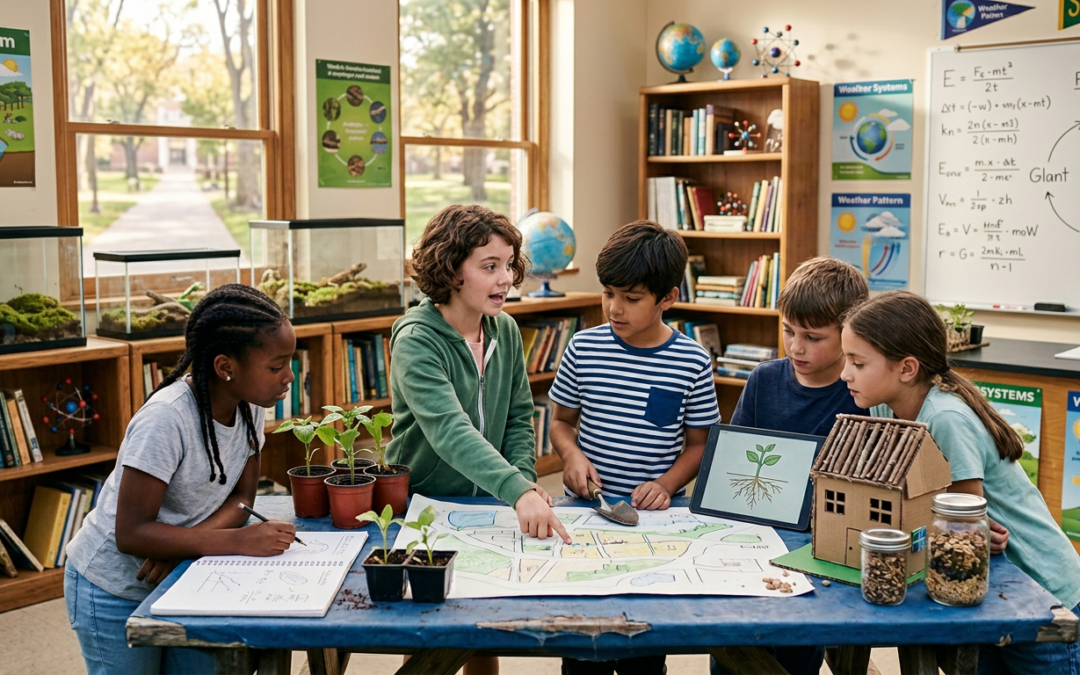
Practical experiences can make these lessons more meaningful. Participating in community projects, growing food, repairing everyday objects, organising fundraising activities or working collaboratively to solve local problems allows children to apply theoretical knowledge in authentic situations. Such experiences can cultivate initiative, perseverance and a sense of responsibility that examinations alone cannot measure.
Nevertheless, responsibility for preparing children for life should not rest exclusively with schools. Parents, communities, employers and policymakers all have a part to play. Families provide the earliest opportunities to develop values and everyday habits, while schools can offer structured learning experiences and equal access to opportunities. A meaningful educational partnership requires these different environments to reinforce rather than contradict one another.
Finding the Right Balance
The debate between academic knowledge and practical life skills is sometimes presented as though societies must choose one at the expense of the other. This is a false dilemma. A child who understands mathematical principles can apply them to household budgeting; someone who studies literature can develop empathy and interpret complex human experiences; and a pupil who learns scientific concepts can use them to make responsible decisions about health and the environment.
The future of education should therefore be built on integration rather than competition. Academic subjects provide the intellectual tools through which individuals understand the world, while practical competencies enable them to navigate it effectively. Both are essential, and neither can fully compensate for the absence of the other.
Ultimately, the success of an education system should not be measured solely by examination results, university admissions or employment statistics. It should also be evaluated by whether young people can think independently, adapt to change, maintain meaningful relationships, manage everyday responsibilities and contribute positively to society.
Perhaps the most important lesson we can teach children is not how to arrive at the correct answer to every question, but how to ask better questions, learn from their mistakes and continue learning long after they leave the classroom. After all, education should not merely prepare children to earn a living; it should prepare them to live wisely, responsibly and meaningfully.
Exercise 1 – Multiple Choice
Choose the correct answer (A, B, C or D).
Your Results
Complete the exercise to see your results.
Exercise 2 – Gapped Text
Complete the sentences using information from the passage. Use NO MORE THAN THREE WORDS.
- recall information
- evidence
- excessive debt
- assumptions
- purposefully
- responsibility
- integration
Your Results
Complete the exercise to see your results.
Study these C1-level expressions from the passage. Each expression is followed by its meaning and an example sentence.
1. Social mobility (noun)
Meaning: The ability to improve one’s social or economic position.
Example: Access to quality education can promote social mobility by giving disadvantaged children better career opportunities.
2. Personal fulfilment (noun)
Meaning: A sense of satisfaction and achievement in life.
Example: Many people believe that personal fulfilment comes from pursuing meaningful goals rather than simply earning a high salary.
3. Profound transformation (noun phrase)
Meaning: A significant and far-reaching change.
Example: Digital technology has brought about a profound transformation in the way students access information and learn.
4. Subject-specific expertise (noun phrase)
Meaning: Advanced knowledge in a particular field.
Example: Teachers need subject-specific expertise as well as the ability to explain complex concepts clearly.
5. Intellectual discipline (noun phrase)
Meaning: The ability to think and work systematically.
Example: Developing intellectual discipline enables students to evaluate evidence rather than accept information without questioning it.
6. Indispensable (adjective)
Meaning: Absolutely necessary; too important to be without.
Example: Critical thinking has become an indispensable skill in a world where information is constantly changing.
7. At face value (idiom)
Meaning: Without examining or questioning something more deeply.
Example: Students should not accept everything they read online at face value; they should check the reliability of the sources.
8. Articulate ideas (verb phrase)
Meaning: To express thoughts clearly and effectively.
Example: Group discussions encourage learners to articulate their ideas and consider different perspectives.
9. Innate (adjective)
Meaning: Existing naturally from birth rather than being learned.
Example: Creativity is not necessarily an innate ability; it can be developed through practice and experience.
10. Short-sighted (adjective)
Meaning: Failing to consider the long-term consequences of a decision or action.
Example: Focusing exclusively on examination results is a short-sighted approach to education.
11. Ethical judgement (noun phrase)
Meaning: The ability to distinguish right from wrong and make morally appropriate decisions.
Example: Studying real-life dilemmas can help young people develop ethical judgement and take responsibility for their actions.
12. Superficial engagement (noun phrase)
Meaning: Involvement with something without developing a deep understanding of it.
Example: Simply memorising facts without questioning them may lead to superficial engagement with a subject.
13. Interconnected world (noun phrase)
Meaning: A world in which people, countries and societies are closely linked and influence one another.
Example: In an interconnected world, students need to understand global challenges such as climate change and economic inequality.
14. False dilemma (noun phrase)
Meaning: A situation in which two options are incorrectly presented as the only possible alternatives.
Example: The belief that education must focus either on academic knowledge or practical skills creates a false dilemma.
15. Meaningfully (adverb)
Meaning: In a way that has purpose, value or significance.
Example: Students learn more meaningfully when they can connect classroom knowledge to real-life experiences.
Exercise 3 – Vocabulary in Context
Find a word or expression in the passage that matches each definition.
- social mobility
- indispensable
- adaptability
- overlooked
- false dilemma
- critical thinking
- superficial
- responsibility
- perseverance
- articulate ideas
Your Results
Complete the exercise to see your results.
Exercise 4 – Word Formation
Complete each sentence using the correct form of the word in brackets.
- critical
- independent
- literacy
- adaptability
- articulation
- responsibility
- development
- superficial
Your Results
Complete the exercise to see your results.
Discussion topic: What should children really learn to succeed in the 21st century?
Prepare a 2–3-minute response addressing the following points:
- The limitations of traditional education.
- The importance of academic knowledge.
- The life skills children need beyond the classroom.
- The influence of artificial intelligence on future learning.
- Your vision of an ideal education system.
Useful C1 expressions for your response:
- It is increasingly evident that…
- We should not lose sight of the fact that…
- There is a growing need to reconsider…
- This raises a fundamental question about…
- Rather than treating these two approaches as mutually exclusive…
- A well-rounded education should equip children with…
- Ultimately, the true measure of education lies in…